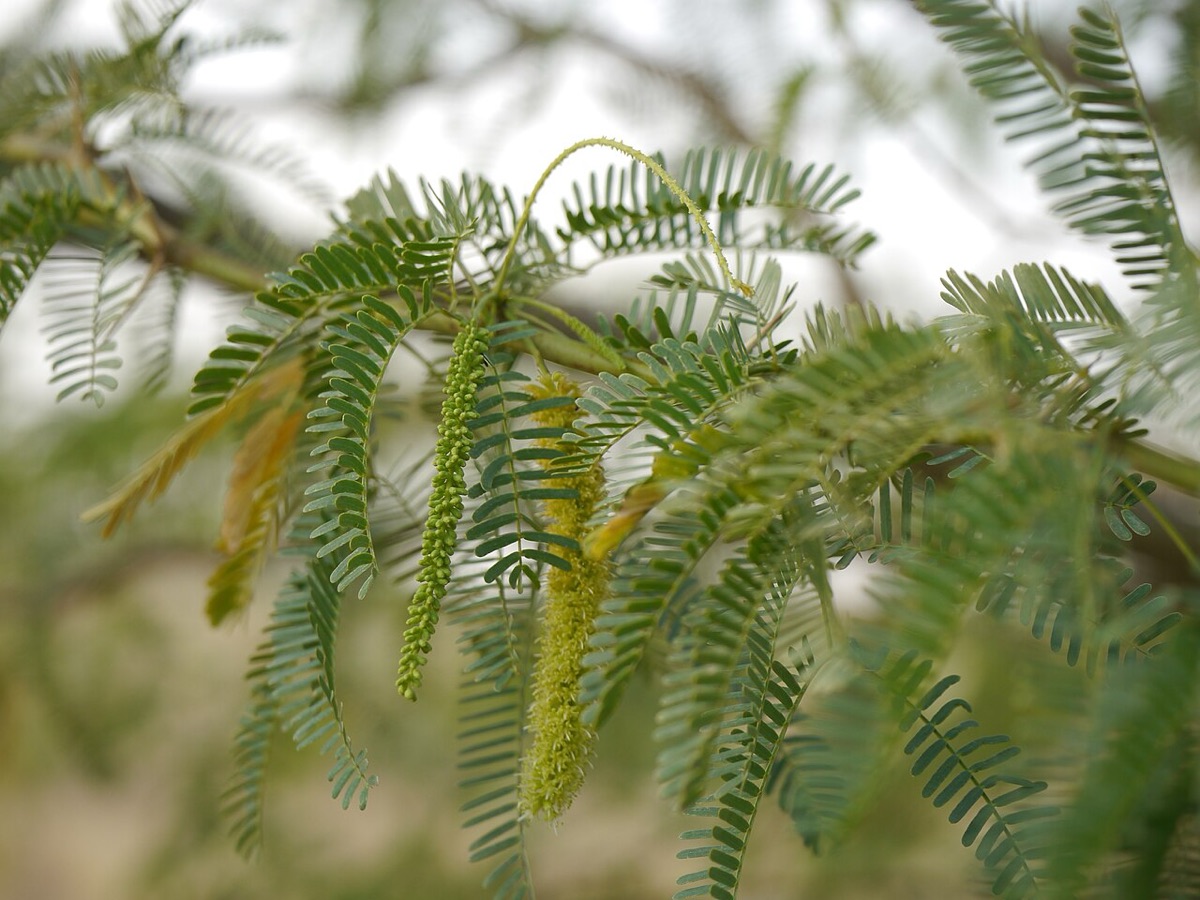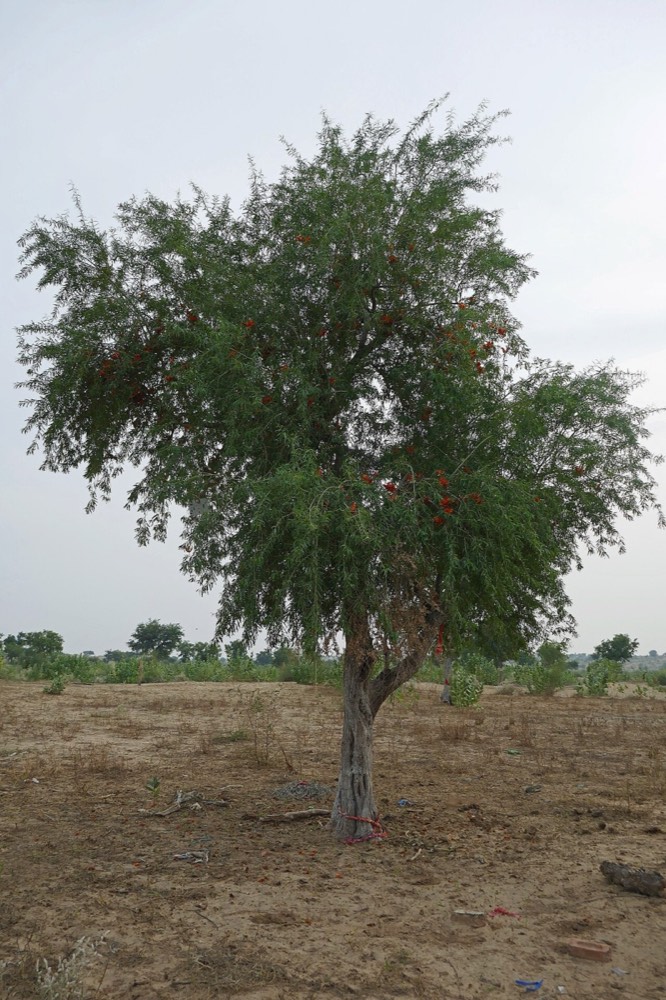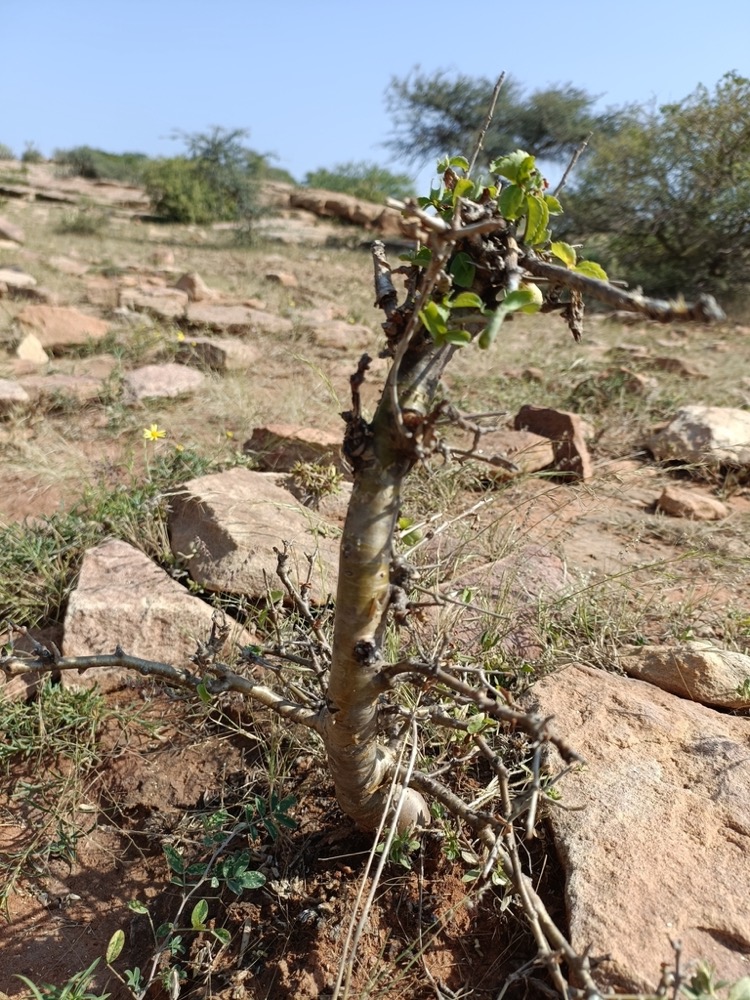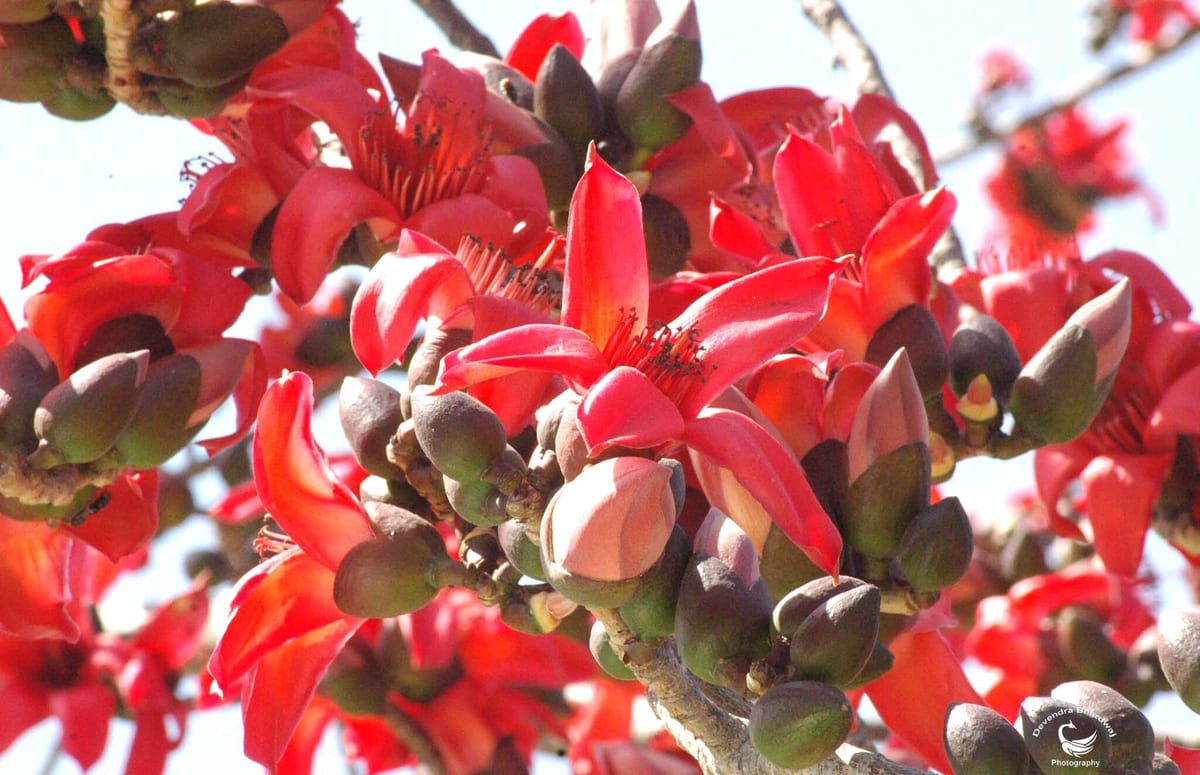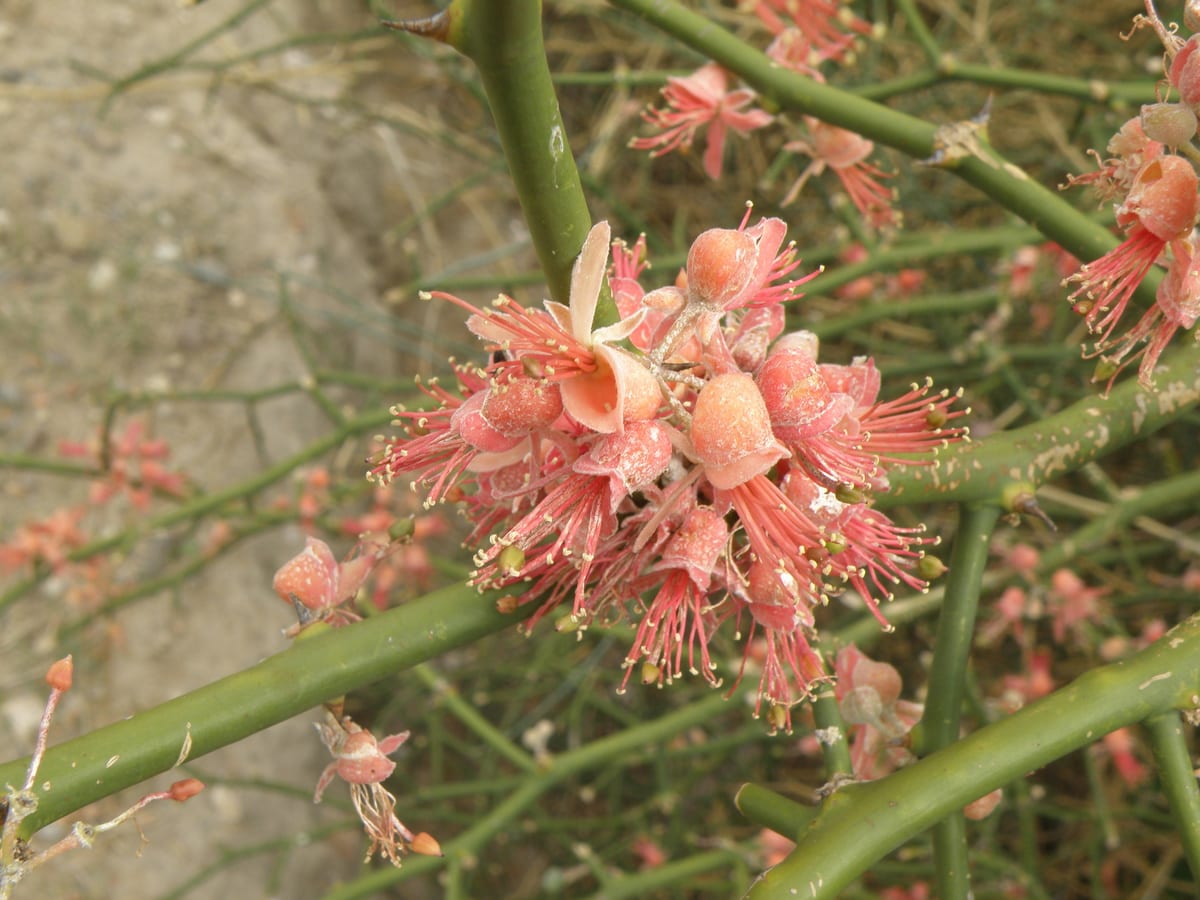
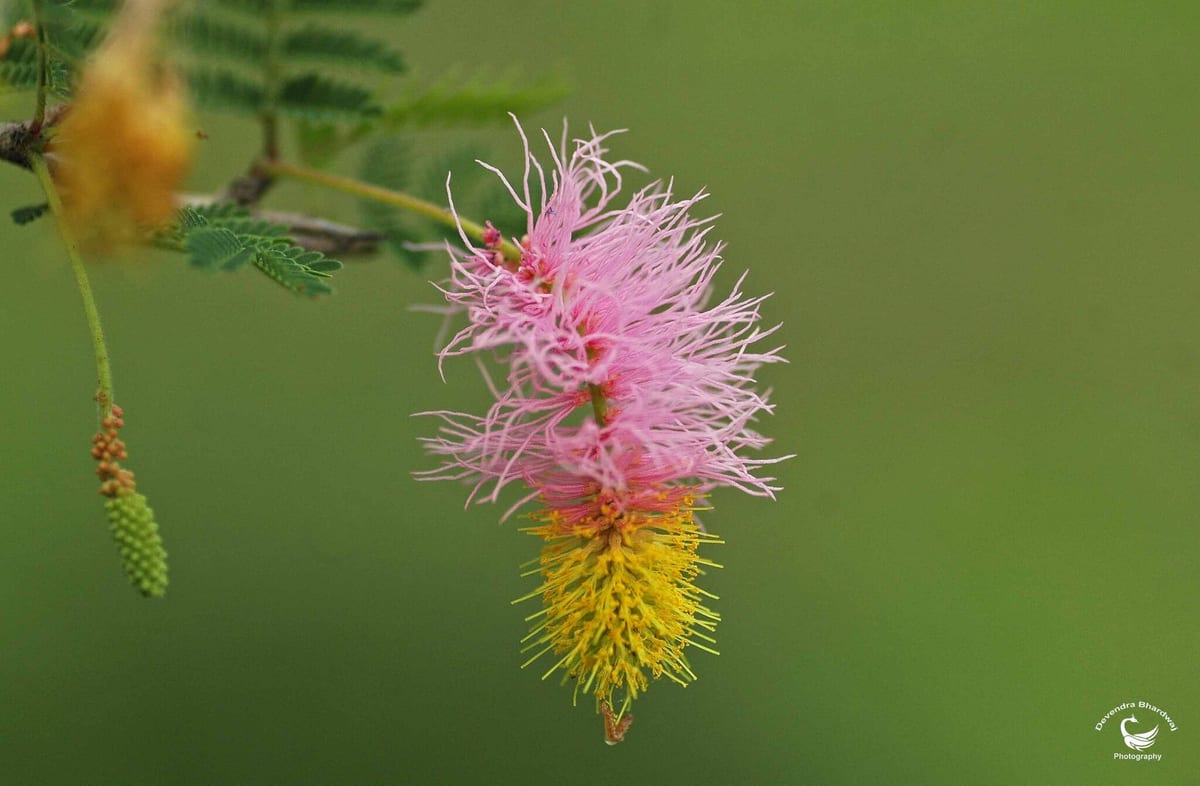
Image: Devendra Bhardwaj · iNaturalist · CC BY-NC 4.0 · Jamwa Ramgarh Wildlife Sanctuary, Rajasthan · Resized
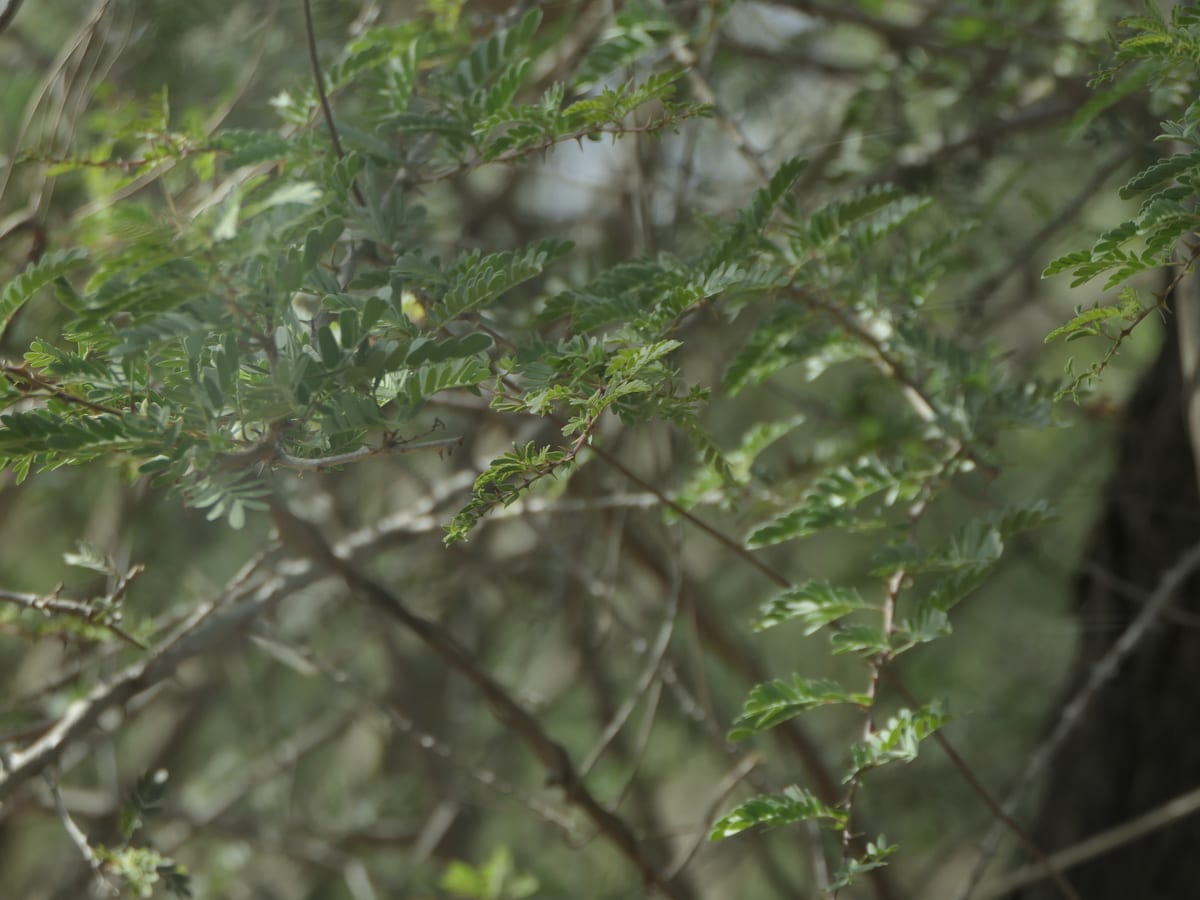
Image: Devendra Bhardwaj · iNaturalist · CC BY-NC 4.0 · Ghati Karolan, Jaipur, Rajasthan · Resized
- Scientific name
- Dichrostachys cinerea
- Hindi name
- वीरतरु
- Family
- Fabaceae, order Fabales
- Group
- Shrub or small tree
- Conservation status
- Least Concern
Pink-and-yellow bottle-brush flowers with a story.
- Spot it Feathery leaves, thorns and flower spikes pink on top, yellow below.
- Home Dry scrub and forest edges.
- Food web Bees visit the flowers; its roots add nitrogen to the soil.
- Why it matters Its roots add nitrogen to poor soil, its flowers feed bees, and its thorny thickets shelter small animals.
Read more: Dichrostachys cinerea on Wikipedia
Sources and credits
Records and field notes
- RajasthanDevendra Bhardwaj photographed its flowers in Jamwa Ramgarh Wildlife Sanctuary, near Jaipur, in August 2010.[20]
- IndiaIn his note he writes that in some regions of India it is mistakenly planted or worshipped as the Shami tree linked with Shani Dev, because it is called Shami or a similar name locally.[20]
- IndiaHe adds that the sacred Shami of Hindu scripture and long-standing custom is Prosopis cineraria (see the Khejri entry).[20]
Sources
- IUCN Red List of Threatened Species (species pages linked on each entry) (database). Global conservation status. Every species page was opened.
- Devendra Bhardwaj. iNaturalist observations and notes, with place and date (inaturalist.org/people/devendrabhardwaj) (field record). The observer's own dated records and notes, with places. Statements in his notes are his own and were not independently checked by KJVF.
- GBIF Backbone Taxonomy and GBIF species data (family, order, Hindi names, IUCN category) (database). Open biodiversity data. Used for classification, Hindi common names and the IUCN category where one is given.
- Wikidata (Hindi labels for species) (database). Open data, used for Hindi common names.
- Wikipedia, the free encyclopedia (opening lines of each species article, CC BY-SA 4.0). The link on each entry goes to the article (reference). Not peer reviewed. Only the opening description is used, and statements about origin or medicinal use are left out.
- Short introductions and key points written with AI help (Google Gemini and Claude) and checked against GBIF where possible (reference). AI-assisted text for general readers. Please check important details before relying on them.
The tag before each record shows the place it was checked for.