
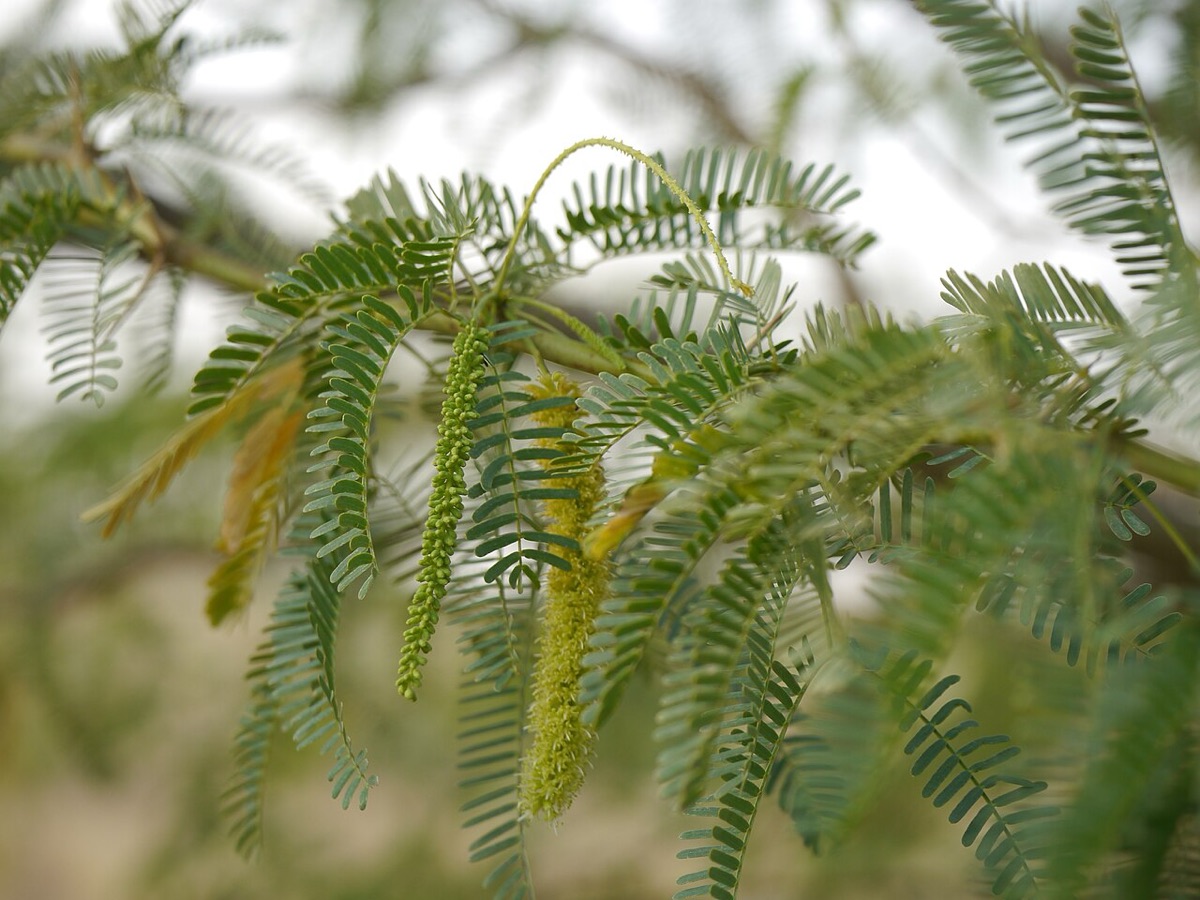
Image: Dinesh Valke · Wikimedia Commons · CC BY-SA 2.0 · Jaisalmer, Rajasthan, 25 October 2018 · Resized
What the sources say
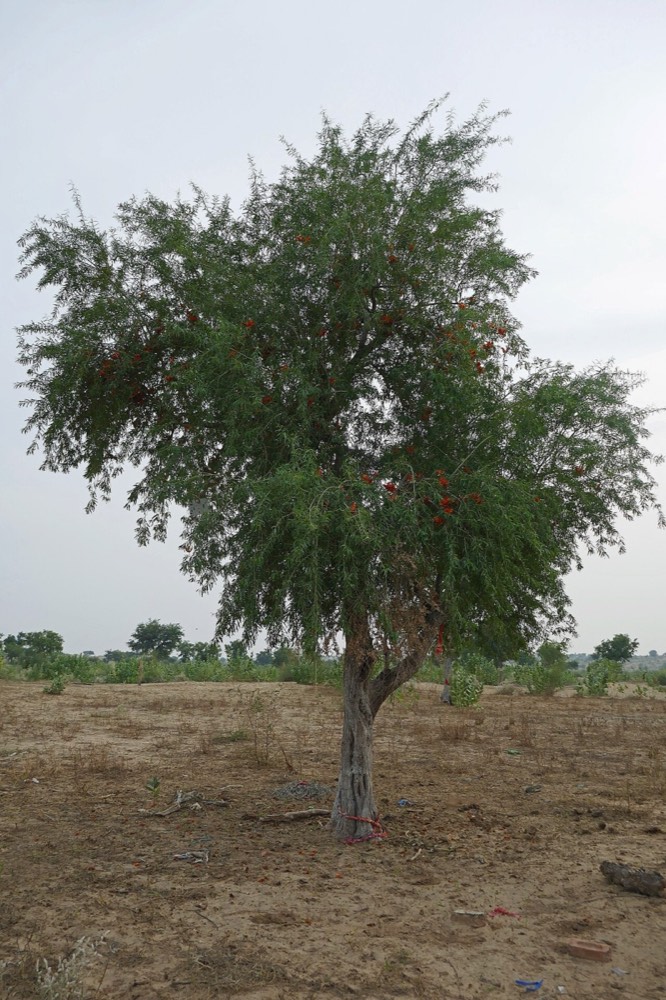
- RajasthanThe most dominant tree of western Rajasthan. It was declared the state tree in 1982-83.[13]
- RajasthanThe unripe pods, called sangri or sangar, are cooked as food. Dried pods are used as fodder for livestock.[13]
- RajasthanKhejri dominates the open woodlots of the Thar landscape where the Great Indian Bustard lives.[5]
- RajasthanIn a farm study in semi-arid Rajasthan, soil improved most under khejri among the trees tested, and its leaf litter decomposed within six months. This comes from the study's abstract.[15]
Sources
- Wildlife Institute of India (2020). Conserving Great Indian Bustard Landscapes through Scientific Understanding and Participatory Planning. Final report (government). Five-year project with the Rajasthan Forest Department.
- Rajasthan Foundation, Government of Rajasthan. Aapno Sanskriti: Khejri, State Tree of Rajasthan (government). Four-page booklet.
- Ali R et al. (2024). Microbiome properties in the root nodules of Prosopis cineraria. Microbiology Spectrum 12(6): e03617-23 (journal). Peer reviewed. The trees were sampled in the United Arab Emirates, not Rajasthan.
- Yadav RP, Yadav PK, Chhipa BR (2008). Litter dynamics and soil properties under different tree species in a semi-arid region of Rajasthan, India. Agroforestry Systems (journal). Peer reviewed. Only the abstract was available.
- Royal Botanic Gardens, Kew. Plants of the World Online (native ranges) (database). Shows native to India. It does not say a plant grows wild in Rajasthan.
The coloured tag before each fact shows where it was verified. A fact checked for India or the world is not assumed to hold for Rajasthan.
_Druce_(45661099651).jpg)