Courses and Publications
Learning from the living world, and putting it on record: short courses for anyone who wants to understand nature properly, and publications that document the natural world around us.
Courses: learn to read the living world
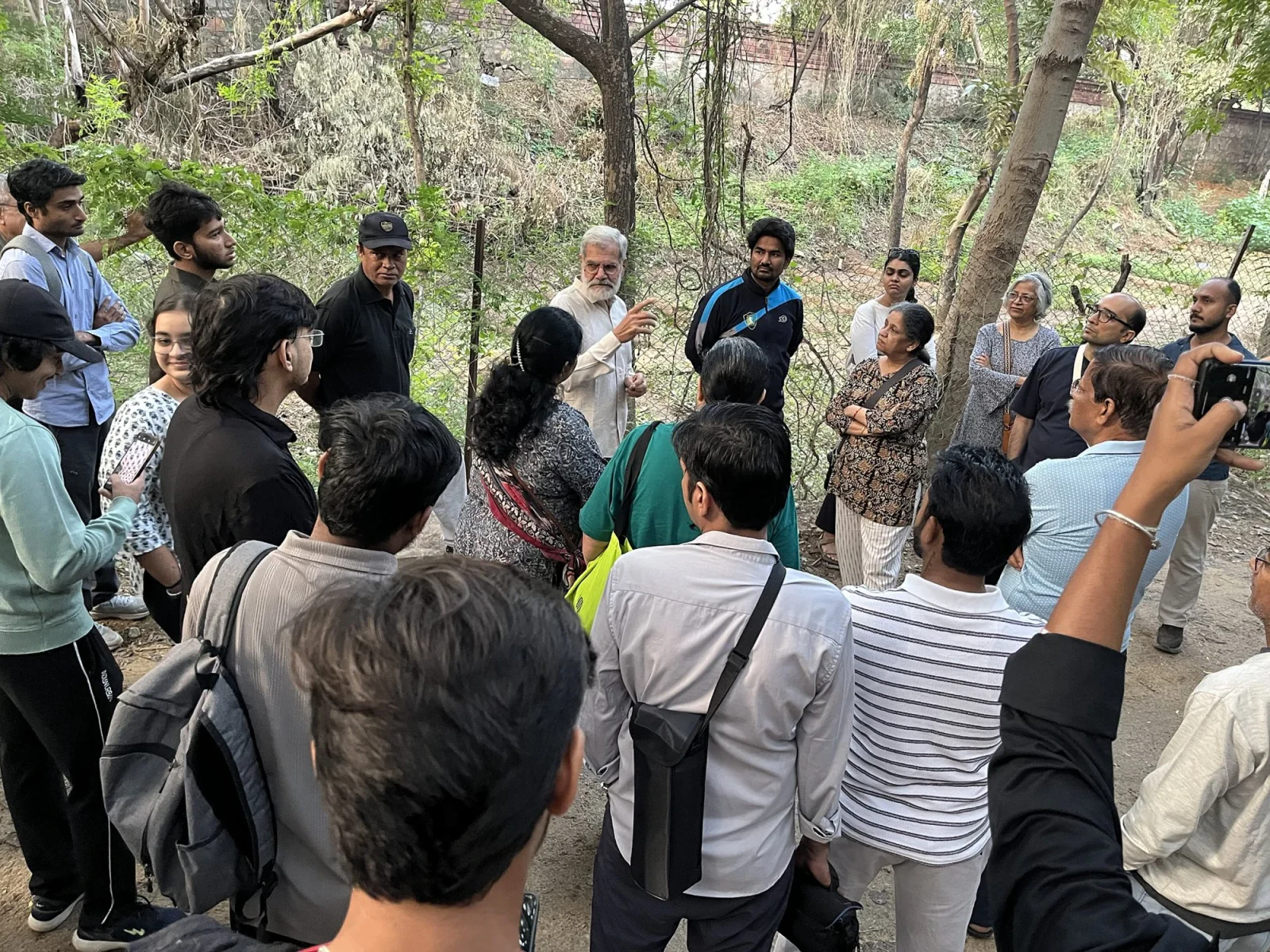
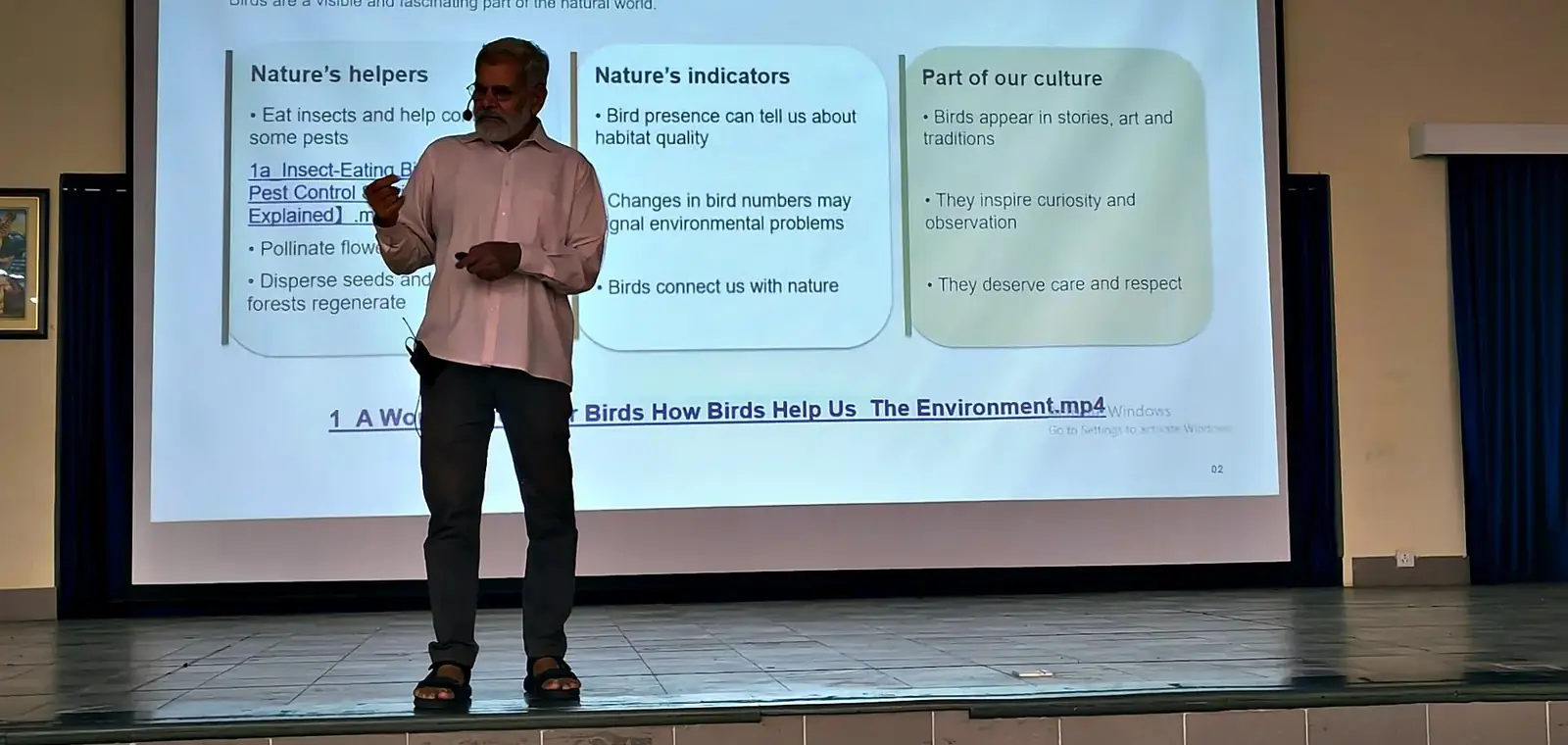
KJVF organises short courses for students, teachers, working professionals and beginners who want to understand nature properly. Every course begins outdoors, with guided observation in a real habitat, and continues in the classroom, where what participants saw becomes the starting point for learning. They learn to observe carefully, identify species accurately, record what they see, and understand how each living thing fits into its ecosystem.
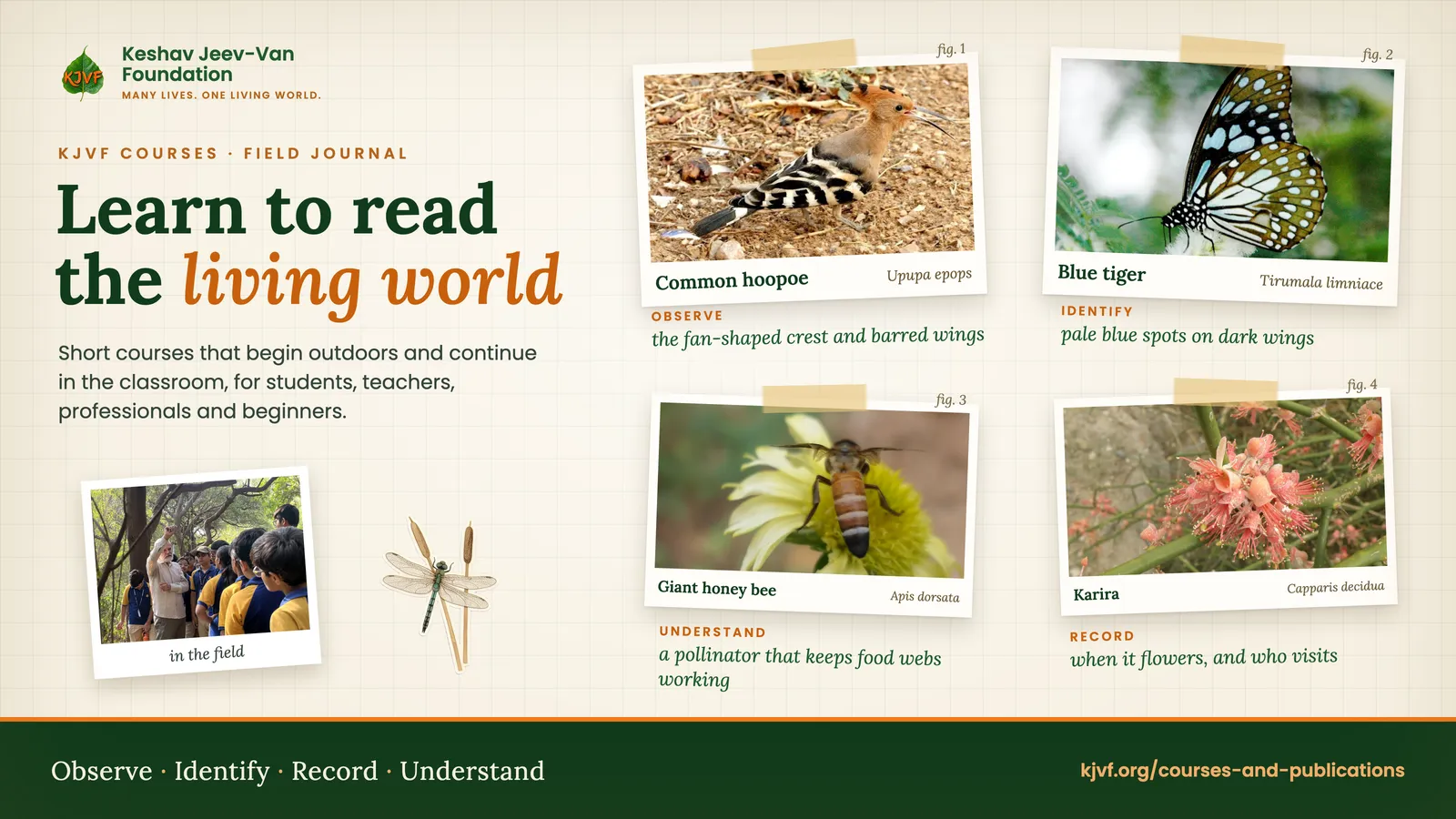
Observe. Identify. Record. Understand.
Subject areas
Birds and bird identification
Reading size, shape, plumage, behaviour and calls to recognise birds in the field.
Insects and pollinators
The small animals that pollinate plants, feed birds and keep food webs working.
Native plants and trees
Recognising the trees and plants that belong to a landscape, and who depends on them.
Habitats, food webs and ecology
How living things are connected, from soil and water to predators and prey.
Wildlife and coexistence
Understanding wild animals and sharing space with them safely and respectfully.
Urban biodiversity
The life that survives in cities, and what helps or harms it.
Water and conservation
Water, habitats and the practical steps that protect them.
How we teach
- Learning in the field: observation in real habitats, not only from slides.
- A scientific approach: structured observation, the features used to identify species, and the difference between a confirmed sighting and a tentative one.
- Recording what you see: field notes and observation sheets.
- Ethical practice: respect for wildlife and habitats at every step.
Publications: putting the natural world on record
What is never written down is easily lost. KJVF documents the natural world, its species, habitats, water and green heritage, and shares that knowledge through scientific and awareness publications. Our documentation is built on field surveys, first-hand observation and photographic records.

What we document
Biodiversity and species
Plants, birds, insects, reptiles and mammals, and how to tell them apart.
Wild animals
Wildlife of forests, grasslands, hills and wetlands.
Urban biodiversity
Nature in parks, gardens, lakes and neighbourhoods.
Native trees and plants
Native flora and its place in the landscape.
Water conservation
Water bodies, traditional water systems and ways to protect them.
Habitat restoration
How damaged land and habitats can recover over time.
Natural heritage
The old trees, gardens, water bodies and green spaces that carry a place's history.
Conservation in the field
Records of the programmes and conservation work we carry out.
Our publications range from detailed scientific documentation to simple awareness material for schools and the public.